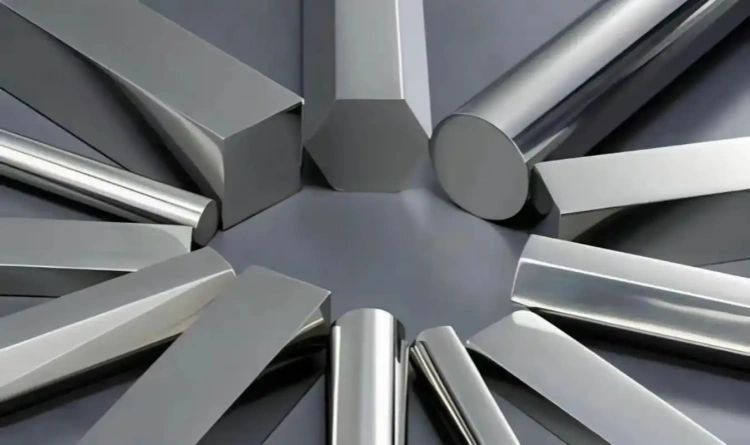
Half the emails we get start the same way: what grade should we use? And nine times out of ten the honest answer is 304. The tenth time is the one that matters, because choosing wrong does not just raise the invoice — it gets a batch rejected after polishing, or a screen rusting in the field two months in.
304 Is the Default for a Reason
Most shaped wire is made in 304. It cold rolls and draws cleanly, holds ±0.02 mm without fighting the die, polishes to a bright finish, and costs the least of the stainless options on our floor. Watch band links, zipper elements, key blanks, decorative profiles — 304 handles all of it.
If the part lives indoors, or outdoors with regular rain washing, and never sees salt or aggressive cleaning chemicals, there is usually no technical reason to move up a grade. Spending more here buys nothing you can measure.
When 316L Actually Pays for Itself
316L carries molybdenum, and molybdenum is what keeps chlorides from pitting the surface. Put the same wire in salt spray or coastal air, or wash it daily with a chloride detergent, and 316L outlasts 304 by a wide margin — not by a year, by a lot.
Three signs you want 316L:
- The previous part came back with brown pits or rust streaks.
- The screen or profile sits in seawater, brine, or chlorine-bearing process water.
- Cleaning uses chloride-based detergents, common in food and pharma plants.
What it costs: roughly 20–30% more in material, plus 316L work-hardens faster than 304, so drawing takes more passes and more intermediate annealing. On a large order that is real money. It is still cheaper than replacing a rusted batch and explaining it to your customer.
Do You Need 304L or 316L Instead of Plain 304 or 316?
The L means low carbon, and it matters in exactly one situation: welding. Weld ordinary 304 and you can leave chromium carbides along the weld boundary that rust in service. The low-carbon grade does not do that. So if our wire gets welded into an assembly downstream, take the L. If it is only cold formed and never welded, plain 304 is fine and a little stronger.
Duplex 2205 and 2507: For Ugly Environments
Duplex grades run about twice the yield strength of 304 and resist chloride stress cracking, which is the failure mode that eventually kills 316L in hot brine. We draw both 2205 and 2507, and we will be straight with you: they are harder work. More passes, more annealing, tighter control on die wear, longer lead time than a 304 job.
If your screen sits in hot chloride service, that extra work is worth paying for. If it sits in a normal washdown, duplex is overkill and you are buying difficulty for nothing.
Titanium Gr2: Two Reasons Only
People specify titanium for weight or for chemistry. It is about 45% lighter than steel at the same section, and it shrugs off chlorides, hypochlorite and seawater without any of the pitting conversation above. It also costs several times what 316L costs per kilo, and it is slower to draw. If weight is not critical and the chemistry is not brutal, titanium is usually the wrong answer.
Quick Reference
| Grade | Where it fits | What to watch |
|---|---|---|
| 304 | General use, indoor or rain-washed outdoor | Pits in chlorides |
| 304L | Parts welded after forming | Slightly lower strength |
| 316L | Salt, coastal, food and pharma washdown | 20–30% dearer, harder to draw |
| 2205 duplex | Hot chloride service, higher strength | Slower drawing, longer lead time |
| 2507 super duplex | Severe chloride plus high strength | Same, plus material cost |
| Titanium Gr2 | Weight-critical, aggressive chemistry | Several times the price |
One Thing Buyers Forget: Grade Changes the Drawing
Grade is not just a line on the price sheet. It changes how the section forms. 304 gives you room to breathe on die design. 316L work-hardens sooner, so the schedule needs an extra anneal or a lighter pass. Duplex needs both, and it punishes a worn die that 304 would tolerate for another week.
That is why we ask what the part does before we quote a price. A 316L quote that assumes 304 processing is a quote that will slip. You can see the sections we run and the sizes we hold every day on our custom shaped wire page — 0.5 to 18 mm, ±0.02 mm on the control dimension, 20 working days standard.
Short Version
- Indoors, no salt, no welding: 304 shaped wire.
- Welded downstream: 304L or 316L.
- Salt, coastal air, chloride cleaners: 316L.
- Hot brine, high load, long service life: 2205 or 2507.
- Weight plus hostile chemistry, budget allows: titanium Gr2.
Still unsure? Send the application, not just the drawing — where the part sits, what touches it, how it gets cleaned. We will tell you the cheapest grade that actually survives it. Write to our sales team and you will get an answer the same working day.
Contact info@ekwire.com for more information about our shaped wire and profile wire products.